

If you’ve ever wondered whether home insurance vs homeowners insurance are two different policies, the confusion makes sense. The terms sound similar, but insurance language can feel deliberately complicated.
Let’s simplify it properly.
In most cases, the two phrases describe the same type of coverage. The difference isn’t in protection — it’s in wording.
“Homeowners insurance” is the official name used in policy documents.
“Home insurance” is the shorter phrase people use in everyday conversation.
That’s it.
But to understand why this matters, you need to look at what the policy actually does.
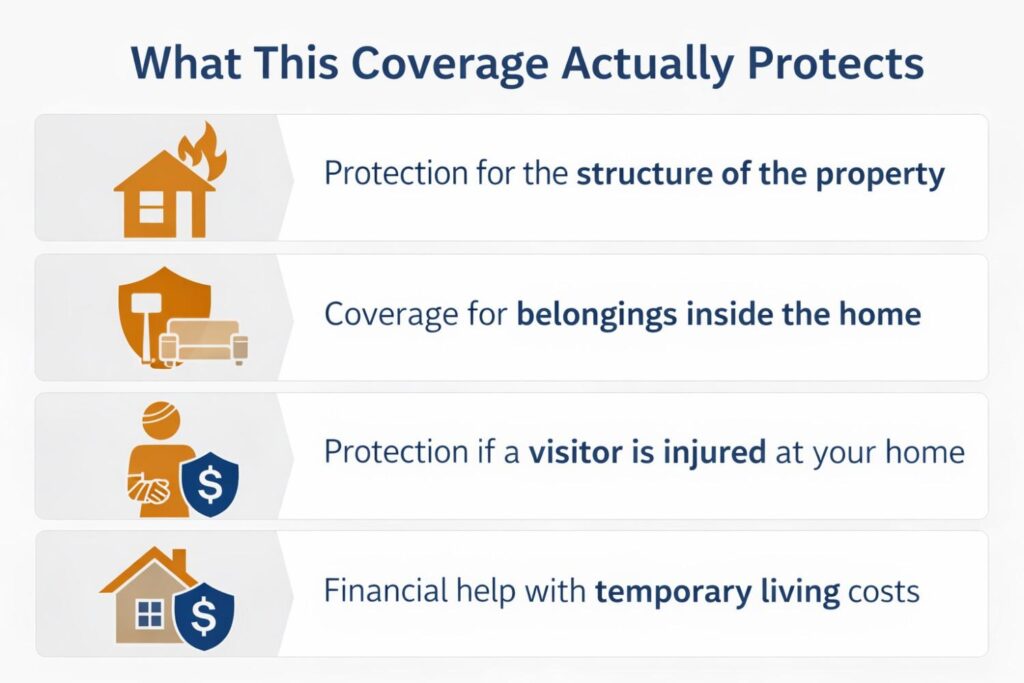
What This Coverage Actually Protects
When someone purchases homeowners insurance, they are not just insuring walls and a roof. The policy is structured to protect several layers of risk connected to owning a home.
Typically, it includes:
- Protection for the physical structure of the property
- Coverage for belongings inside the home
- Protection from liability if a visitor suffers an injury at your residence.
- Financial assistance for temporary living costs after major damage
So when people ask, “What is home insurance?” they often mean a comprehensive coverage package created for owner-occupied residences.
The terminology changes. The protection usually does not.
Where the Real Confusion Begins
The misunderstanding often starts when other terms enter the conversation.
Property Insurance vs. Home Insurance
Property insurance is a broad category. It is used to insure various property types, including commercial buildings, rental spaces, warehouses, shops, and houses.
Homeowners insurance is simply one type of property insurance — designed for owner-occupied residential properties.
So while homeowners insurance fits under the property insurance umbrella, the reverse is not always true.
Home Insurance vs. Hazard Insurance
Hazard insurance is another term that causes confusion.
Hazard insurance typically refers only to coverage for physical damage to the home caused by events like fire, wind, or storms. Mortgage lenders sometimes use this term because they primarily care about protecting the structure tied to the loan.
Homeowners insurance usually includes hazard coverage — but it also extends beyond it by covering belongings and liability.
So hazard insurance is narrower. Homeowners insurance is broader.
Why People Use Different Terms
There are practical reasons the wording varies:
- Consumers prefer shorter phrases like “home insurance.”
- Insurance companies use formal labels in policy contracts.
- Search engines reflect how people speak, not how policies are titled.
- Lenders focus on structural protection, not full coverage.
Over time, the phrases blend together in everyday use.
Also, If you’re comparing policies and trying to understand what coverage might cost, reviewing a structured breakdown can help clarify things. this detailed guide on getting a free home insurance estimate explains how insurers calculate premiums, what factors influence pricing, and what information you’ll need before requesting a quote. It’s a helpful next step if you want to move from understanding terminology to evaluating real coverage options.
Does the Name Change the Cost?
No.
The premium depends on factors such as:
- The home’s replacement cost
- Location and local risk exposure
- Deductible choices
- Claims history
- Coverage limits
Whether someone says “home insurance” or “homeowners insurance” does not affect pricing. The structure of the policy does.
If you’re evaluating costs in Florida specifically, using a Florida Home Insurance Calculator
can help you see how location and coverage levels influence estimated premiums.
A Practical Way to Think About It
Instead of focusing on wording, ask:
- Do I own and live in the home?
- Do I need coverage for both the structure and my belongings?
- Do I want liability protection included?
If the answer is yes, you’re looking for homeowners insurance — even if you searched for “home insurance.”
The important distinction isn’t the phrase. It’s understanding what the policy actually covers and what it does not.
Also, Want a broader overview of what a standard homeowners policy typically covers? The Insurance Information Institute explains the basics.
Final Answer
When comparing home insurance vs homeowners insurance, the difference is almost always linguistic rather than structural.
The coverage is designed for homeowners. The terminology simply shifts depending on who is speaking.
Understanding the broader terms — like property insurance or hazard insurance — helps avoid confusion when reviewing policies or lender requirements.
At the end of the day, clarity about coverage matters more than the wording used to describe it.