

Introduction
Many Florida homeowners are seeing renewals arrive with a noticeably higher price tag than last year. If you’re wondering why did my home insurance go up, the answer is usually not a single issue — it’s a mix of statewide risk, rising rebuild costs, and insurer pricing changes that can affect your policy even when nothing about your home feels different.
Let’s break down what’s driving these increases and what they mean for you.
What’s Causing Home Insurance Costs to Rise in Florida?
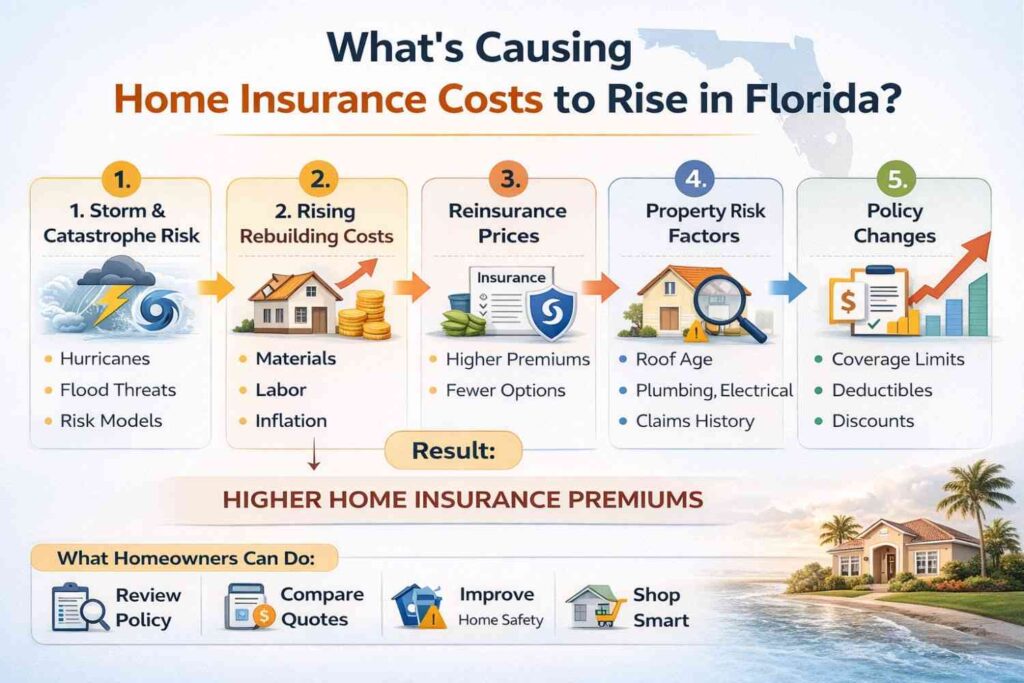
A premium increase rarely stems from one isolated factor. Instead, insurers evaluate statewide risk, rebuilding expenses, regulatory conditions, and property-specific details when calculating your renewal rate.
Here are the most common contributors.
Statewide Storm Exposure and Catastrophe Modeling
Florida faces some of the highest hurricane exposure in the country. Insurance companies rely on forward-looking catastrophe models to estimate potential future losses — not just past claims.
When severe storms impact parts of the state:
- Total claim payouts increase
- Risk models are recalibrated
- Premium structures adjust accordingly
Even if your home hasn’t experienced damage, regional storm risk can still influence your renewal cost.
Higher Reconstruction and Material Costs
Home insurance is based on replacement cost — the amount required to rebuild your home — rather than its real estate market value.
Over the last several years:
- Building materials have become more expensive
- Skilled labor costs have increased
- Supply chain issues have delayed construction timelines
If your policy includes automatic inflation adjustments, your dwelling coverage limit may have increased to reflect these higher rebuilding costs. When coverage increases, premiums typically follow.
Reinsurance Market Pressures
Behind every homeowner policy is a layer of reinsurance — protection purchased by insurance companies to guard against catastrophic losses.
After multiple active storm seasons:
- Reinsurance pricing rose substantially
- Availability tightened
- Insurers adjusted homeowner rates to offset rising operational expenses
While homeowners rarely see this process directly, it plays a significant role in premium adjustments across Florida.
According to data from the FLOIR, insurers have requested multiple rate increases in recent years due to rising catastrophe exposure and reinsurance costs.
Property-Specific Risk Factors
Sometimes, the change is tied more directly to your individual property.
Common underwriting triggers include:
- Roof age nearing replacement thresholds
- Aging plumbing or electrical systems
- Prior water damage claims
- Updated inspection findings
In Florida, roof condition is particularly influential. Even if a roof appears functional, insurers may increase rates as it approaches certain age benchmarks.
Coverage Changes at Renewal
Renewal policies can include adjustments that aren’t always obvious at first glance.
For example:
- Coverage limits may increase automatically
- Deductible structures may shift
- Discounts could expire
- Endorsements may be added or removed
Reviewing your declarations page carefully can often clarify where changes occurred.
Ongoing Market Corrections
Florida’s property insurance landscape has experienced significant volatility over the past decade due to litigation costs, insurer insolvencies, and fraud-related pressures.
Recent legislative reforms aim to stabilize the environment, but pricing adjustments often take time to reflect these changes.
As insurers strengthen their financial footing, rate recalibrations may continue in the near term.
What This Means for Your Household Budget
Rising insurance premiums impact more than just one bill — they affect your overall cost of homeownership.
Insurance works alongside:
- Mortgage payments
- Property taxes
- HOA fees
- Maintenance expenses
If your premium increase significantly changes your monthly housing costs, reassessing your broader financial picture may be helpful. Tools such as a Florida home loan estimator can provide perspective on how insurance adjustments influence total affordability.
Can Premiums Rise Without a Claim?
Yes — and this often surprises homeowners.
Insurance pricing reflects:
- Regional risk exposure
- Industry-wide loss trends
- Inflation and reconstruction expenses
- Reinsurance market conditions
A clean claims history helps, but it does not shield you from broader market adjustments.
P.S: If you’re also confused about the terminology used in your policy documents, it helps to understand the distinction between coverage types. Many homeowners use the terms interchangeably, but there are subtle differences worth knowing. break this down in details on home insurance vs. homeowners insurance, which explains how coverage structures, liability protection, and policy components work together — and why that understanding matters when reviewing a premium increase.
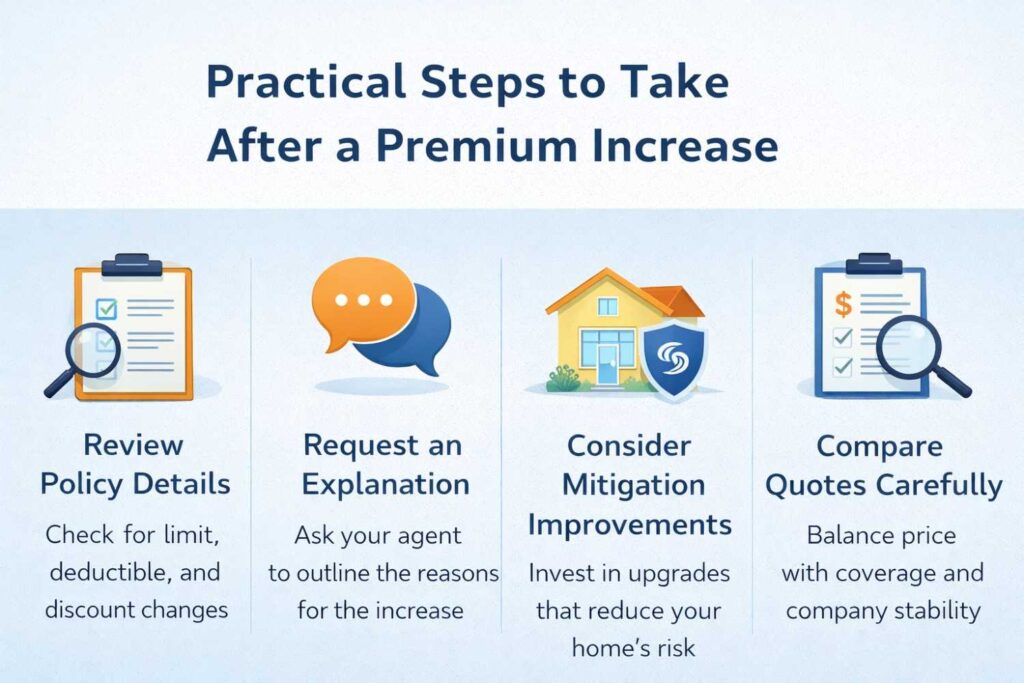
Practical Steps to Take After a Premium Increase
Instead of reacting emotionally, approach the situation methodically.
Review the Policy Line by Line
Look for:
- Changes in coverage limits
- Adjusted deductibles
- Missing discounts
- New endorsements
Ask for a Detailed Explanation
Contact your agent and request a breakdown of the increase. Ask what specifically influenced the new rate.
Evaluate Mitigation Improvements
Protective upgrades may help reduce long-term risk exposure:
- Impact-resistant windows
- Hurricane straps
- Secondary water barriers
- Updated plumbing systems
Wind mitigation inspections can sometimes reveal discount opportunities.
Compare Carriers Thoughtfully
Shopping around can help, but balance price with:
- Financial strength
- Claim responsiveness
- Policy exclusions
The lowest quote is not always the safest option.
Is the Market Stabilizing?
There are signs of gradual improvement, including new insurers entering Florida and regulatory reforms designed to curb excessive litigation.
However, external factors such as storm activity and construction costs still influence pricing. While volatility may ease over time, adjustments are likely to continue as the market normalizes.
Final Thoughts
Seeing your renewal premium increase can be frustrating, especially if you’ve taken care of your home and avoided claims. That reaction makes sense given how quickly Florida’s property insurance environment has been shifting.
Premium changes are rarely random. They typically reflect broader economic conditions, updated risk modeling, or policy adjustments.
By reviewing your coverage carefully, understanding what drives insurance pricing, and exploring mitigation or comparison options, you can make informed decisions rather than reactive ones.
Staying educated is one of the most effective ways to protect both your home and your financial stability in Florida’s evolving insurance landscape.