


If you’re a homeowner—or planning to become one—you’ve likely come across both mortgages and home equity loans. At first, they might seem similar since both involve borrowing money using a home. However, they serve very different purposes.
Understanding the difference between a home equity loan vs mortgage is important because choosing the wrong option could cost you more in the long run or limit your financial flexibility.
This guide breaks everything down clearly so you can make the right decision based on your situation.
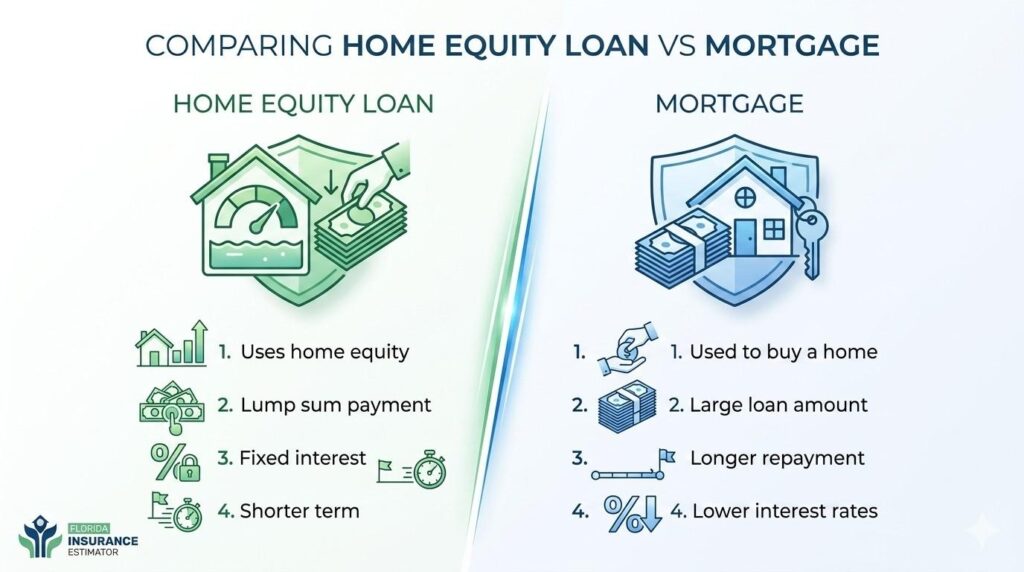
What distinguishes a home equity loan from a mortgage?
A mortgage is a loan used to buy a home, while a home equity loan allows you to borrow against the value of a home you already own.
In simple terms:
- A mortgage helps you purchase a property
- A home equity loan lets you tap into the equity you’ve accumulated in your property
What Is a Mortgage?
A mortgage is typically the first loan you take when buying a home. It allows you to spread the cost of the property over many years instead of paying everything upfront.
Key Features of a Mortgage:
- Used to buy or refinance a home
- Long repayment terms (usually 15–30 years)
- Interest rates can be fixed or adjustable
- Secured by the property itself
Because mortgages involve large amounts of money, lenders carefully evaluate your credit score, income, and financial history.
What Is a Home Equity Loan?
A home equity loan, commonly referred to as a second mortgage, gives you access to funds using your home’s equity
What Is Home Equity?
Home equity is the difference between:
What your home is worth
What you still owe on your mortgage
For example:
- Home value: $400,000
- Remaining mortgage: $250,000
Equity: $150,000
Key Features of a Home Equity Loan:
- Borrow against existing home equity
- Usually comes with a fixed interest rate
- Paid in a lump sum
- Typically shorter terms (5–20 years)
Because of this, it’s often used for:
- Home improvements
- Debt consolidation
- Major expenses
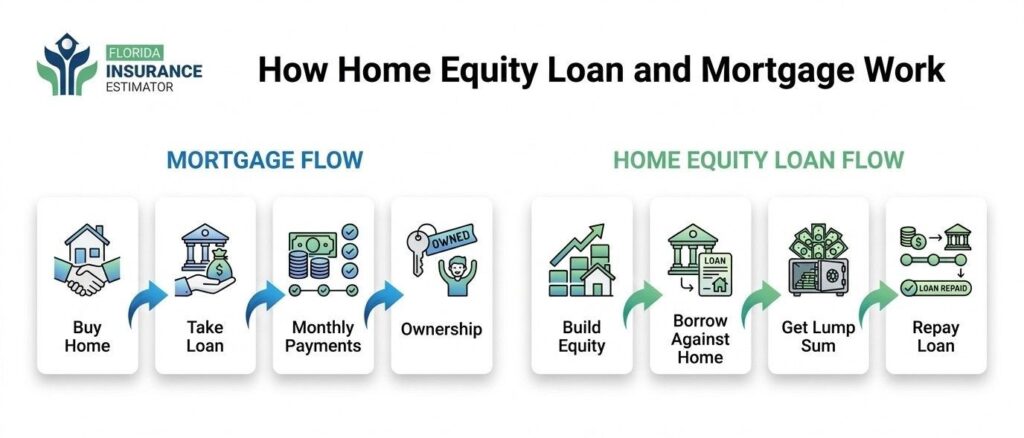
Home Equity Loan vs Mortgage: Key Differences
Understanding the differences helps you decide which option fits your needs.
Purpose
- Mortgage: Used to buy or refinance a home
- Home Equity Loan: Used to access cash from your home’s value
Timing
- Mortgage: Taken when purchasing a home
- Home Equity Loan: Taken after you’ve built equity
Loan Structure
- Mortgage: Large loan, long-term repayment
- Home Equity Loan: Smaller loan, shorter repayment
Interest Rates
- Mortgages often have lower rates
- Home equity loans may have slightly higher rates but are usually fixed
Risk
Both are secured loans, meaning:
Your home is used as collateral
However, taking on additional loans increases your financial risk if you’re unable to repay.
When Should You Choose a Mortgage?
A mortgage is the right option if:
- You’re buying a home
- You’re refinancing to get a better rate
- You want to change loan terms
In most cases, you don’t have a choice here—if you’re purchasing property, you’ll need a mortgage unless you’re paying in cash.
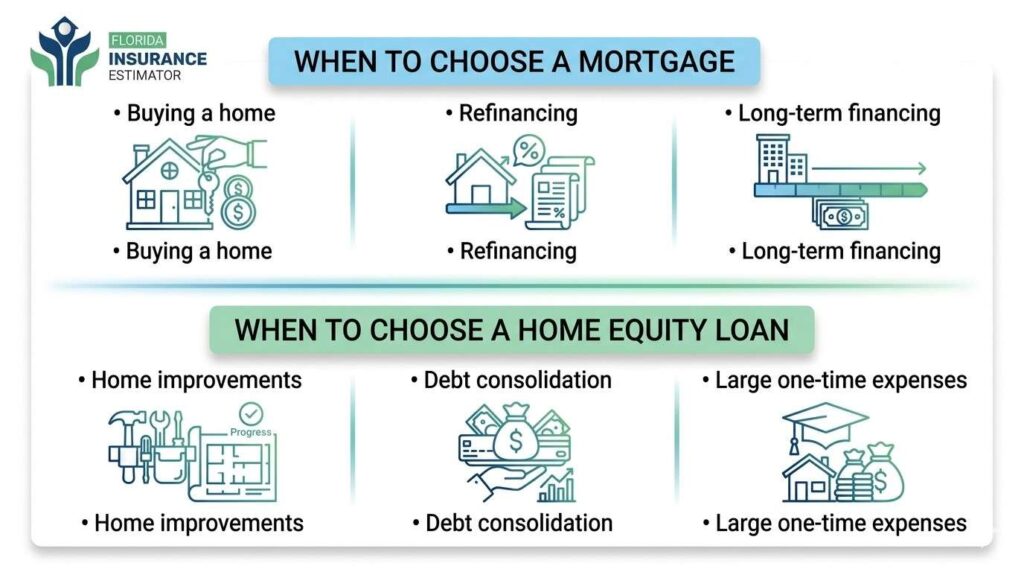
When Should You Choose a Home Equity Loan?
A home equity loan makes more sense when:
- You’ve built sufficient equity
- You’re looking for a single payout to cover a specific cost
- You want predictable monthly payments
It’s commonly used for projects like:
- Renovating your home
- Covering large medical expenses
- Consolidating high-interest debt
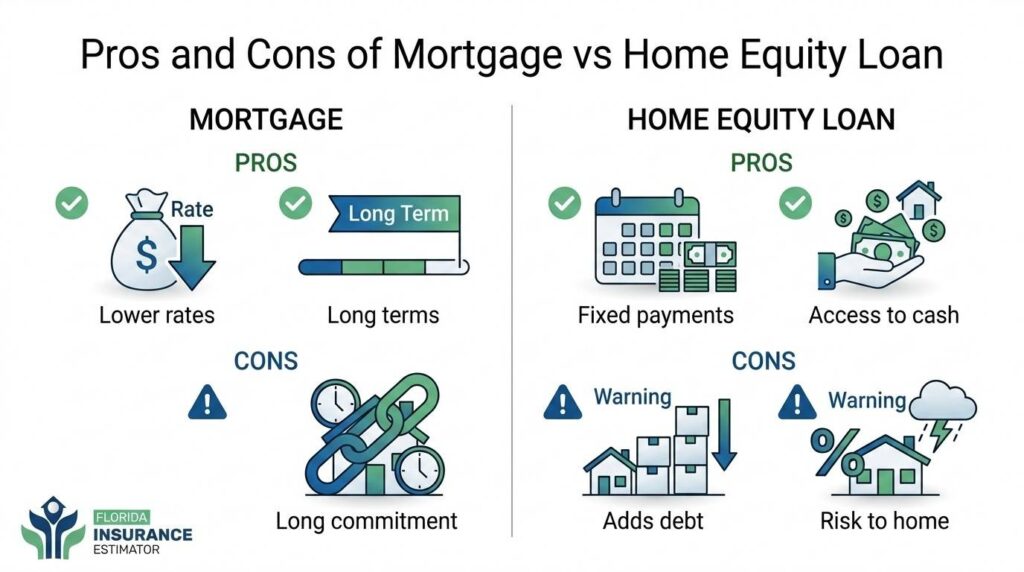
Pros and Cons of Each Option
Mortgage Pros:
- Lower interest rates
- Longer repayment periods
- Essential for homeownership
Mortgage Cons:
- Long-term financial commitment
- Interest paid over time can be significant
Home Equity Loan Pros:
- Access to large amounts of cash
- Fixed interest rates
- Useful for planned expenses
Home Equity Loan Cons:
- Adds another monthly payment
- Risk of foreclosure if not repaid
- Reduces available equity
Can You Have Both at the Same Time?
Yes, many homeowners have both a mortgage and a home equity loan.
In this case:
- The mortgage is the primary loan
- The home equity loan is the secondary loan
However, lenders will consider your total debt and income before approving a second loan.
What About HELOC vs Home Equity Loan?
While comparing home equity loan vs mortgage, it’s also worth mentioning HELOCs (Home Equity Lines of Credit).
- Home Equity Loan: Lump sum, fixed rate
- HELOC: Revolving credit, variable rate
HELOCs offer flexibility, but they come with variable interest rates, which can change over time.
How Do You Decide Which One Is Right for You?
The right choice depends on your situation.
Choose a Mortgage If:
- You’re buying a home
- You need long-term financing
- You want lower interest rates
Choose a Home Equity Loan If:
- You already own a home
- You need a specific amount of money
- You want fixed, predictable payments
Factors to Consider Before Deciding
Before choosing between a home equity loan vs mortgage, consider:
- Your current financial stability
- How much equity you have
- Interest rates and loan terms
- Your long-term financial goals
It’s also helpful to estimate your overall home-related costs. For example, tools like a fl insurance calculator can help you understand how insurance expenses fit into your budget alongside loan payments.
Common Questions Homeowners Ask
A. Not necessarily. They serve different purposes. One isn’t better—it depends on your needs.
A. Yes, but it’s less common and comes with additional risk.
A. No. It’s a separate loan in addition to your mortgage.
A. Mortgages generally have lower rates, especially primary mortgages.
Final Thoughts
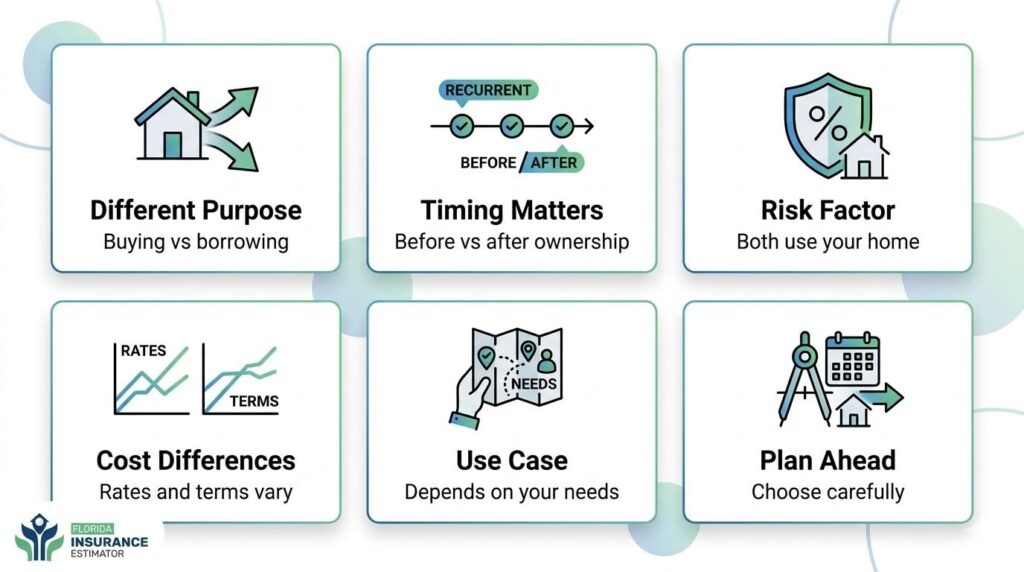
When comparing a home equity loan vs mortgage, the key difference comes down to timing and purpose.
A mortgage helps you buy a home, while a home equity loan helps you make use of the value you’ve already built. Both can be useful tools when used correctly, but they also come with responsibilities.
The best approach is to understand your financial position, consider your goals, and choose the option that aligns with your needs—not just what seems easiest in the moment.